

Non-invasive acoustic, thermal & tracer-gas — we find the leak before we touch the wall.
Westminster Leak Repair Pros uses non-invasive acoustic, thermal, and tracer-gas technology to find leaks under slabs, inside walls, and beneath Standley Lake basin foundations before any demolition work begins. We serve all 17 Westminster neighborhoods, both ZIP codes, and the full NW Denver metro. Call (303) 552-3896 for same-day Westminster service.
Westminster grew in four distinct waves along the US-36 Denver-Boulder corridor. Each era left a different pipe material behind, and each material fails in a different way under the city's moderately-hard Clear Creek water (7-8 grains per gallon from the Semper Water Treatment Facility).
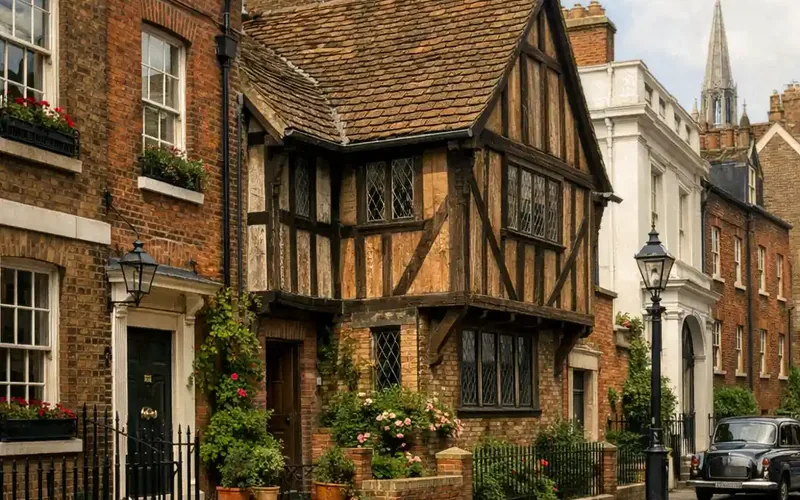
Westminster Heights, Hilltop Westminster, Sheridan Greens, Harris Park area. Post-WWII Denver suburb tracts with basement and crawlspace foundations. Galvanized steel corrodes from the inside out; you see rust-colored water first, then reduced pressure, then pinhole failure. Original copper from this era is now in full-scale failure territory under 7-8 GPG mineral load.
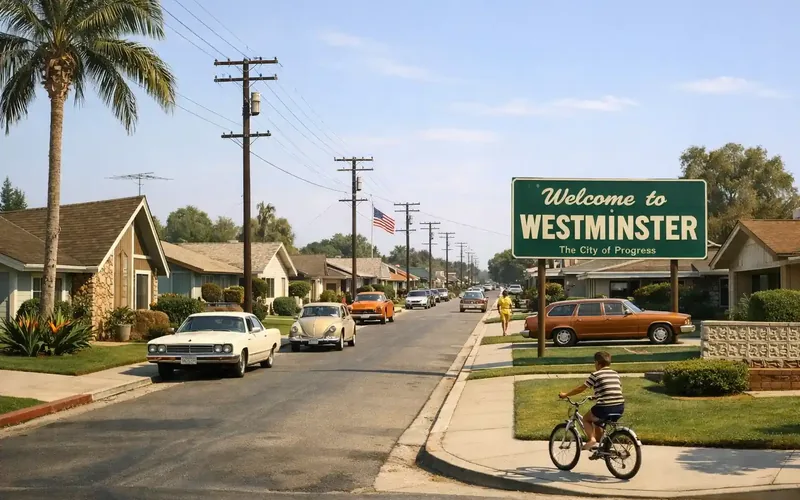
Cotton Creek, Trendwood, Mandalay Gardens, Wright Farms, Country Club Village, Park Centre. Basement-dominant ranch and two-story suburban builds. Copper supply lines from this era are now in the pinhole-failure cohort. Clear Creek's moderately-hard water accelerates pitting corrosion at elbows and solder joints. These are the most active failure calls we take in Westminster.
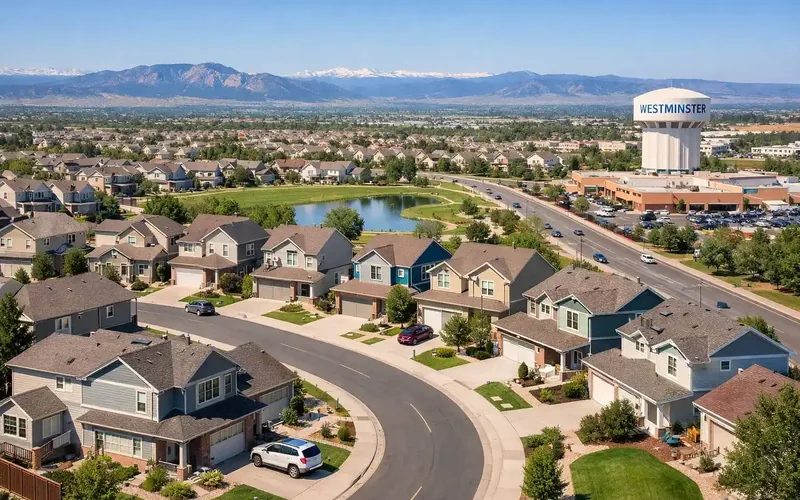
Walnut Grove Westminster, Crown Pointe Westminster, Skyline Estates, Wadsworth Estates Westminster, Standley Lake area. Master-planned developments, mostly basement-dominant with some slab. Mid-decade copper is entering early pinhole territory; late-decade installs began the PEX transition. Slab foundations in this era are most vulnerable to the Front Range's bentonite expansive clay cycle.
Bradburn Village, newer Standley Lake-adjacent, infill. Bradburn's 2000s New Urbanism development brought PEX as the standard supply material. PEX resists pinhole corrosion well, but foundation settling in Westminster's expansive bentonite clay can stress fittings and manifold connections. Slab leak risk shifts from pipe-material failure to soil-movement stress.
Not sure which cohort your Westminster home falls into? A quick call to (303) 552-3896 takes two minutes. We can pre-identify the likely pipe material and failure mode before we arrive, which shortens the detection window and keeps costs down.
Westminster's combination of Front Range bentonite clay soils, finished basements common in Denver suburbs, and moderately-hard Clear Creek water creates three priority leak vectors that drive most of our calls.
Westminster's bentonite clay generates hydrostatic pressure against basement walls through the spring snowmelt season. Finished basements throughout Cotton Creek, Wright Farms, and Walnut Grove suffer water intrusion where the slab meets the wall. We locate the entry point non-invasively before recommending any opening work.
Westminster straddles the Adams and Jefferson county line across soil that swells when Clear Creek snowmelt saturates it and contracts during summer drought. That expansion-contraction cycle cracks foundation walls and drives water through hairline fissures. Thermal imaging identifies moisture migration paths before structural damage sets in.
Copper supply lines running beneath Westminster's 1990s-era slabs are in their first-failure decade. The city's 7-8 GPG Clear Creek water accelerates pitting at sweated fittings, and bentonite clay movement shifts pipe positions under the concrete. Acoustic and electronic detection pinpoints the failure before any concrete work begins.
Most Denver suburbs buy water wholesale. Westminster doesn't. The city has operated its own independent water system since 1925, and understanding that system explains most of what we find inside Westminster walls and under Westminster slabs.
Westminster's water starts as snowmelt near Idaho Springs, Central City, and Georgetown, travels down Clear Creek across roughly 400 square miles of mountain watershed, and arrives at Standley Lake. Westminster owns more than half of Standley Lake's 14-billion-gallon capacity. The Semper Water Treatment Facility, built in 1969 and expanded to 44 million gallons per day, treats approximately 65 percent of that supply before it reaches your tap at a hardness of 100 to 135 parts per million, or about 7 to 8 grains per gallon. That falls in the moderately-hard range. Surface water from mountain snowmelt picks up enough dissolved calcium and magnesium along the way to produce real scale at copper elbows and inside water heaters over a 25-to-40-year window, which maps directly onto the 1970s-to-1990s housing cohorts generating most of Westminster's pinhole leak calls today. The Clear Creek Basin snowpack dropped to 2002 record-low levels in spring 2026, triggering a city Drought Watch on April 15. Lower lake levels concentrate minerals slightly, which is worth monitoring for homeowners in older Westminster neighborhoods with copper supply systems.
Westminster's independent water identity has deep civic roots. During the "Long Hot Summer of 1962," extreme conditions forced the city to use "safe, but stinky" Kershaw Ditch Water to meet demand. A group of Westminster housewives responded by staging what is still known as the "Mother's March on City Hall," parading with signs and posters for television cameras and demanding safe water for their families. That march accelerated Westminster's commitment to its own Standley Lake system and the 1963 agreement with the Farmers Reservoir and Irrigation Company to raise Standley Lake Dam. The city has operated independently ever since, and that independence means Westminster homeowners are served by a system whose chemistry we know in specific detail, down to the hardness range and seasonal variation.
Before you call, use these tools to understand what you're dealing with. Each is built on Westminster-specific data: local utility rates, Clear Creek water chemistry, Front Range climate, and Westminster's actual housing cohorts.
Check your Westminster water meter reading against usage patterns to flag hidden leaks before your next City of Westminster bill arrives.
Use this toolEnter your drip rate and Westminster's current water rate to see exactly what a hidden leak is costing per month. Embed on your own site.
Use this toolAnswer five questions about your Westminster home's age, foundation type, and water chemistry symptoms to estimate your slab leak risk level.
Use this toolWestminster's January lows reach 10 to 22 degrees Fahrenheit. This tool pulls current Clear Creek Basin weather to assess overnight freeze risk for exposed pipes.
Use this toolWestminster's warm summers and low humidity create high pool evaporation. Use our bucket test protocol to distinguish normal evaporation from a structural pool leak.
Use this toolFrom the 1950s-era streets of Westminster Heights in Adams County to the 2000s New Urbanism of Bradburn Village near the Jefferson County line, we serve every neighborhood in the city and adjacent communities.
We serve all of Westminster, Adams and Jefferson Counties, and the surrounding NW Denver metro. Licensed in Colorado through DORA. No forms, no waiting.
(303) 552-389624/7 Emergency Line. Licensed in Colorado. No dispatch fee.