
Thermal Imaging Leak Detection in Westminster, CO
Westminster homeowners dealing with thermal imaging leak detection can reach our team at (303) 552-3896. We use non-invasive acoustic, thermal, and tracer-gas technology to locate the failure point before any wall or slab opening work begins. Licensed in Colorado through DORA. Serving all of Westminster, Adams and Jefferson Counties.
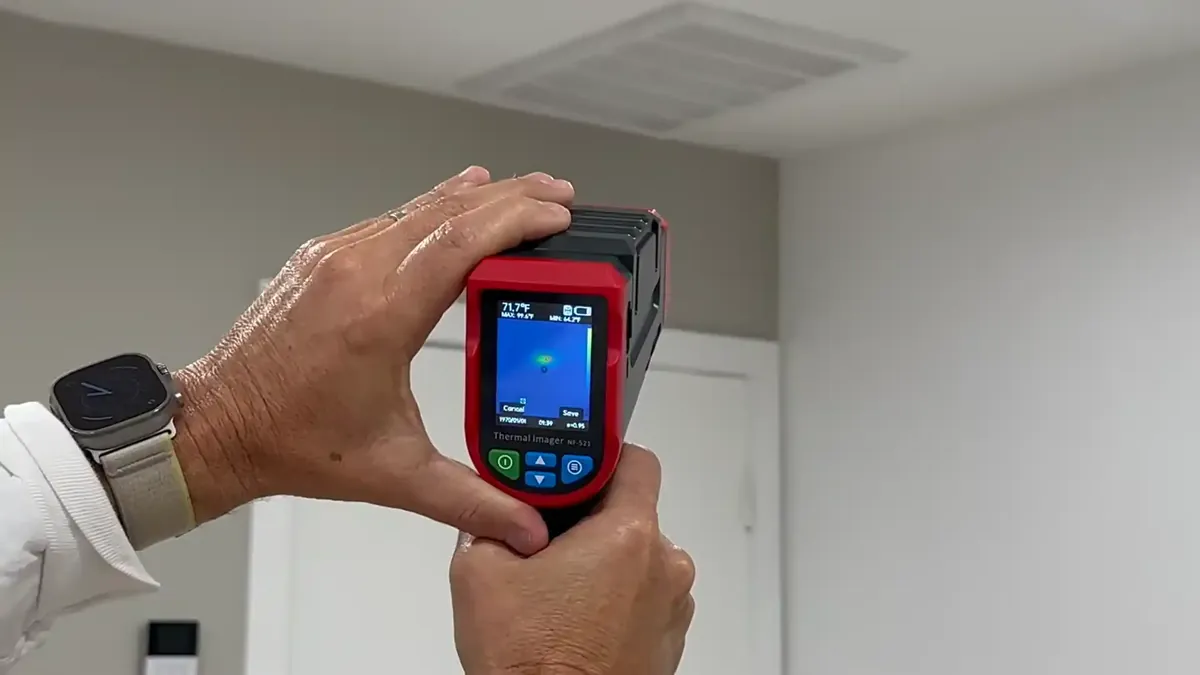
Thermal imaging cameras detect temperature differences at wall, floor, and ceiling surfaces. Moisture inside a building assembly creates a cooler surface temperature than surrounding dry material, which the infrared camera displays as a color contrast. In Westminster's seasonal climate, temperature differential between heated interiors and cold snowmelt-sourced moisture produces clear thermal signatures through finished wall surfaces.
What Causes thermal imaging leak detection in Westminster
Westminster's Clear Creek snowmelt creates an annual moisture-introduction event that makes thermal imaging particularly valuable in the city's spring season. From February through April, Clear Creek snowmelt saturates Westminster's bentonite clay soil, raises the local groundwater table, and introduces moisture into foundation walls, basement slabs, and crawlspace assemblies across the city. A Westminster homeowner who notices a soft spot on a basement wall, a cold zone on a first-floor tile surface, or an unexpected musty odor in spring can use thermal imaging to map the moisture extent inside wall and floor assemblies before committing to any opening or excavation. Thermal imaging in Westminster's spring season, when the temperature differential between the cold moisture entering from below and the heated interior space above is at its annual maximum, produces particularly clear thermal signatures of moisture migration paths through building assemblies.
Westminster's thermal imaging service addresses moisture from both supply-line failures and environmental intrusion, which is a distinction that matters for the repair approach. A thermal anomaly in a Westminster basement wall during the Clear Creek snowmelt season could be a supply pipe pinhole inside the wall, groundwater migrating through a foundation crack, or snowmelt saturating the exterior wall from above grade. Thermal imaging identifies the temperature pattern of each source: active supply-line leaks produce a specific thermal signature that originates at the pipe location and radiates outward; groundwater intrusion produces a pattern that enters at the base of the wall and rises through the foundation material; exterior wall moisture from above-grade saturation produces a pattern that descends from the top of the wall assembly. Distinguishing these patterns shapes the repair recommendation appropriately for each Westminster home.
Thermal Imaging Leak Detection: The Westminster Detection Process
Westminster thermal imaging is performed with calibrated infrared cameras under conditions that maximize temperature differential. We survey all suspect wall, ceiling, and floor surfaces from the most accessible interior face, recording thermal images at each location. Identified thermal anomalies are cross-referenced with moisture meter readings to confirm that the temperature differential is moisture-related rather than from a different heat source such as a duct, an electrical panel, or an exterior wall penetration. Confirmed wet zones are then assessed with acoustic listening at the thermal anomaly location to determine whether an active pressurized supply leak is the source or whether the moisture is from a static source such as groundwater intrusion. The combined thermal and acoustic assessment produces a confirmed source identification before any wall, floor, or slab surface is opened.
When you call (303) 552-3896, we ask three questions upfront: the approximate age of your Westminster home, your foundation type (basement, slab, or crawlspace), and whether you've noticed hot-spot flooring, a spike in your City of Westminster water bill, or unusual sounds from the wall. This pre-diagnosis shapes which detection tools we bring — so the right equipment arrives on the first visit.
Thermal Imaging Leak Detection: The Repair Phase
Westminster thermal imaging results are documented in a service report with annotated thermal images showing the wet zone location and extent on each surveyed surface. The report specifies whether the identified moisture is supply-side or environmental, the estimated extent of the wet zone inside the wall or floor assembly, and the recommended repair approach. For supply-side confirmed leaks, the thermal report accompanies the repair plan with the targeted opening location specified. For environmental moisture sources, the thermal report documents the moisture entry path for the Westminster homeowner's reference in planning waterproofing or exterior drainage corrections. We provide the thermal imaging assessment and the subsequent repair as a single-service commitment.
Westminster Water Chemistry and thermal imaging leak detection
Westminster's Clear Creek surface water arrives at the Semper Water Treatment Facility and the Northwest Water Treatment Facility at a hardness of 100 to 135 parts per million, or roughly 7 to 8 grains per gallon. That sits in the moderately-hard category — harder than Denver's typical municipal blend at comparable pressure — and hard enough to deposit meaningful scale at copper sweated joints over a 20-to-35-year lifespan. Understanding Westminster's mineral load helps calibrate detection. The acoustic signature of water escaping through a scale-lined pipe differs from a fresh-cut copper failure, and our equipment accounts for Westminster's specific pipe-condition profile when interpreting signal strength across different neighborhood cohorts.
Common Questions About thermal imaging leak detection in Westminster
Related Westminster Leak Services
Westminster thermal imaging used for basement and foundation moisture assessment connects to our basement leak service and foundation leak service when the thermal survey identifies environmental moisture sources. For thermal anomalies in Westminster walls or ceilings that confirm supply-line failures, the thermal survey connects directly to our wall leak service or ceiling leak service for the repair phase. Westminster homeowners wanting a complete non-invasive assessment that includes thermal imaging alongside acoustic and electronic detection should schedule our non-invasive leak detection service.